Policy lessons
Covers policies and programmes with a track record of reducing poverty, spanning human capital formation, social protection, decent work, and the social and solidarity economy and cooperatives.
Governance mechanisms are at the heart of coherent policy approaches that accelerate poverty reduction, aligning economic, social and environmental objectives. The Asia-Pacific region has demonstrated proven and promising policy practices placing well-being at the centre of its development trajectory.
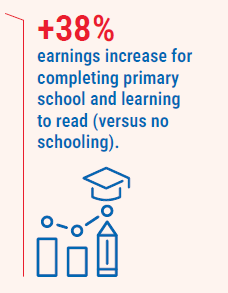
Investing in human capital development breaks intergenerational cycles of poverty. Equitable access to quality and affordable education, healthcare and nutrition, supported by climate action strengthens resilience, enhances productivity and promotes social mobility while remaining fiscally and environmentally sustainable.
For decades, countries in the Asia-Pacific region have demonstrated that human capital development and economic growth are mutually reinforcing rather than competitive objectives. This underpins how political commitment has been key to maximizing available resources and solutions to achieve mutually reinforcing socioeconomic outcomes at all stages of development.
Universal and inclusive social protection systems are a key lever for poverty reduction and for managing covariate risks across the lifecycle. Climate-responsive schemes reduce multidimensional poverty while optimizing productivity and resilience.
The ESCAP SPOT Simulator demonstrates how investing in universal child, disability, maternity and old-age benefits, even when set at global average benefit levels, could substantially reduce poverty and inequality while also boosting household consumption. Figure 3.1 presents poverty outcomes across 30 countries and territories under these simulated universal schemes. The introduction of universal non-contributory social protection schemes at these benefit levels is estimated to reduce poverty by more than two-fifths on average under both poverty lines, with poverty declining by over half in 10 countries across the Asia-Pacific region at a fiscal cost of less than 6% of GDP.

Notes: * Data on household income was used as the welfare measure. Particular care should be taken when comparing results for the Philippines, Türkiye and Viet Nam with those of other countries. ** No updated national poverty rates are currently available for Cambodia. Therefore, we have used the most recently reported rate, which is from 2019. The impact of introducing universal child, maternity, disability and old-age benefits is presented for 30 countries with available household income and expenditure survey data from 2011–2024.
Universal and rights-based social protection is a key driver for poverty reduction, ensuring individuals achieve income security and meet basic needs to live a dignified life across the life course. Despite its transformative potential, social protection is frequently treated as a residual policy instrument, with programmes that are narrowly targeted, short in duration and insufficiently financed. Yet, comprehensive and inclusive social protection systems can provide a foundation for individuals and households to invest in their well-being, strengthen their resilience and pursue improved development outcomes.
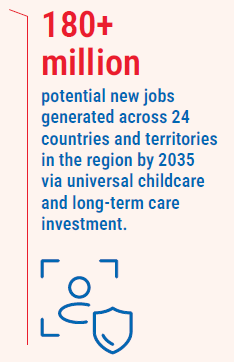
A good job strategy is central to poverty reduction. Expanding decent work through job-rich green transition policies and active labour market programmes, transforming agrifood systems, improving physical and digital accessibility, increasing access to assistive technologies and investing in the care economy are key to lifting workers out of poverty, supporting vulnerable groups and preparing the workforce for new opportunities, especially women, young people, persons with disabilities and older persons.
Boosting the size and productivity of the workforce, strengthening its resilience and building inclusive labour markets with decent work opportunities are all urgent priorities for eradicating poverty. Labour force participation in Asia and the Pacific is declining steadily along with slowing growth in labour productivity. Discrimination on the basis of gender, age or disability excludes large segments of the population from actively contributing to and benefiting from labour markets. Decent work deficits, including limited access to rights and poor access to contributory social protection schemes, are widespread due to informality. At the same time, workers often lack the skills needed to meet the demands of the current and future labour market, especially as digital transformation reshapes jobs, limiting their ability to compete for employment in the formal sector and access decent, sustainable livelihoods. Policy implementation towards decent work for all ensures building inclusive labour markets where the working-age population outside the labour force faces no barriers to entry regardless of gender, age or disability, while those already employed are supported through job transitions and also protected from being pushed out of work involuntarily or permanently.
Cooperatives in the Asia-Pacific region have proven to offer viable community-driven solutions to address the intersecting drivers of poverty, optimizing the principles of solidarity, mutual aid, equality and fairness. The Social and Solidarity Economy (SSE) offers an enabling ecosystem for cooperatives to optimize participatory and collective action towards economic, social and environmental resilience.
Cooperatives play a key role in the economies and societies across the Asia-Pacific region, and contribute towards key objectives of the Social and Solidarity Economy (SSE), a concept that has gained prominence. SSE, encompassing entities such as cooperatives, associations, mutual societies, foundations, social enterprises and self-help groups collectively holds potential to contribute to poverty reduction by implementing a set of principles and values such as care for people and planet, equality and fairness, interdependence, self-governance, transparency and accountability, and the attainment of decent work and livelihoods.
Gender responsive, disability-inclusive and age-sensitive policies across all domains are essential to equitable poverty reduction. Targeted measures, including strengthening the care economy, supporting the growth of MSMEs through access to markets and finance, among others, closing digital and skills gaps, and ensuring equal access to social protection will help address the structural drivers of poverty among women.
Neither prevalence nor drivers of poverty are fixed across time and space. Anti-poverty policy packages must be tailored to country context and remain agile in addressing changing drivers of poverty over time following evidence from regular monitoring and evaluation processes.